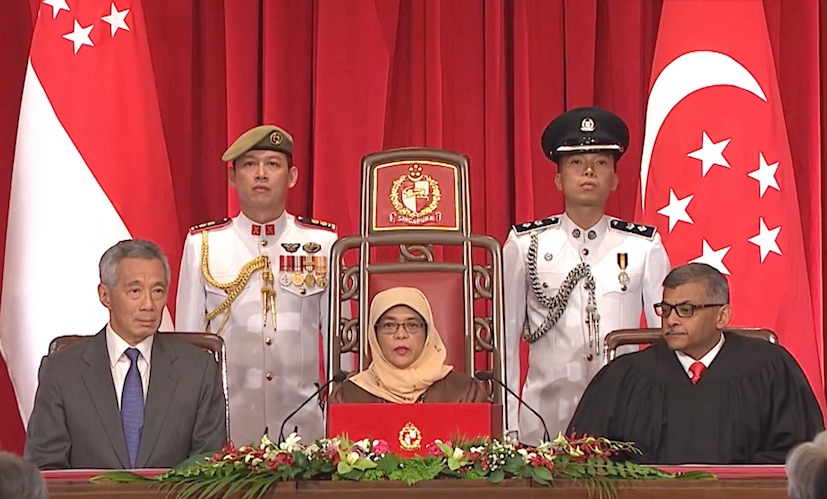

President Halimah Yacob was officially sworn in at the Istana at 6pm today 鈥� she’s the first female president of the country and the first Malay head-of-state in 47 years.
“I, Halimah Yacob, having been elected as President of the Republic of Singapore, do solemnly swear that I will faithfully discharge my duties,” she pledged in an oath-taking ceremony attended by ministers and various other dignitaries.
Earlier today, she spent her first day at the Istana as president and received a tour of its grounds. In a speech to her supporters yesterday, the president promised to start work immediately and to be a 鈥減resident for everyone, regardless of race, language, religion or creed鈥�.
In her first speech as president following the ceremony, Halimah vowed to uphold the principles of multi-racialism and meritocracy, and called upon fellow Singaporeans to work together in addressing future challenges, including an aging population, healthcare and fighting terrorism and Islamophobia.

She also touched upon the contentious reserved presidential election, and acknowledged citizens who were (and still are) against it.
鈥淚 respect their views,鈥� she said. 鈥淟ike them, I look forward to the day when we will no longer need to rely on the provision to have reserved elections, and Singaporeans naturally and regularly elect citizens of all races as Presidents.鈥�
In his speech, Prime Minister Lee Hsien Loong described the day as a significant moment in Singapore鈥檚 history, highlighting how the majority in the country has made 鈥渆xtra efforts to ensure that minorities enjoy equal rights鈥�.

Reaffirming his confidence in Halimah adapting to and excelling at her new role, he stated that she鈥檒l bring to the presidency a heartfelt concern for her fellow citizens.
鈥淵our life story symbolises the sort of society that we aspire to be, and reminds us that the Singapore story is one of hope and opportunity,鈥� he said.
Indeed, it鈥檚 a historic occasion for Singapore, albeit one that鈥檚 overshadowed by widespread聽doubts over the intentions of the ruling government聽and the absence of聽voting.


