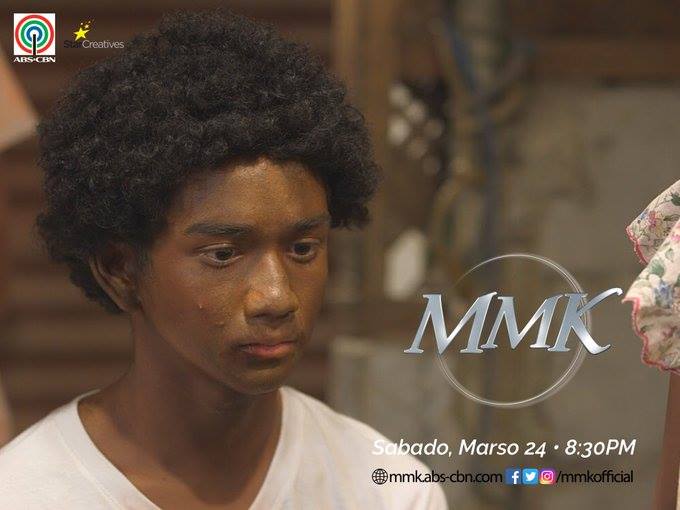

There are probably only a few places in the world where the use of blackface to portray dark-skinned people on television is still acceptable, and the Philippines happens to be one of those places.
On Saturday, long-running TV anthology Maalaala Mo Kaya? (Memories)聽did just that to tell the story of Norman King, the first Aeta person to graduate from the country’s premiere college, the University of the Philippines (UP).
Aeta people are indigenous tribes found in Central Luzon and are typically darker-skinned compared to the rest of the population.
Ironically, while the episode is titled聽Equal Rights, the show took lighter skinned Filipino actors Jhong Hilario, Zaijan Jaranilla, and Nikki Valdez, and put them in blackface.
The weekend show has been running on the ABS-CBN network since 1991 and continues to be popular today, with the show’s hashtag trending on Twitter almost every week.
While the tweets are usually about tear-jerking moments from the story or performances by the actors on the show, the last episode also included negative feedback from Filipinos who called it out for resorting to blackface.
Netizen Divino Cunningham called out the irony of blackfacing actors instead of giving aspiring Aeta actors the 鈥渆qual rights鈥� to represent themselves.
King, the subject of the episode, made headlines last year when he walked up the stage in a “lubay” — a traditional aeta g-string —聽.
According to media reports that covered the graduation, King is the first Aeta to graduate from UP.
After high school, King worked in Manila as a delivery boy in 2004 for PHP3,700 (US$74) a month. He was able to take up a vocational course to become a computer technician in the same year and then landed a job in 2008 at an outsourcing firm that paid him PHP16,000 a month (US$320). He was able to put himself through school at the same time.
Netizen @azumerryll also criticized the show’s use of “equal rights” as the episode’s title.
“Stop preaching ‘equal rights’ when it’s something that you can’t even practice. Show equality and represent cultural diversity in our community by portraying ACTUAL dark-skinned Filipinxs in the media.”
the AUDACITY for abs-cbn to call it . Stop preaching “equal rights” when it’s something that you can’t even practice. Show equality and represent the cultural diversity in our community by portraying ACTUAL dark-skinned filipinxs in the media.
鈥� merryll (@azumerryll)
A netizen who goes by the twitter handle @marcds_ thought it would be better to overlook the black facing of actors and “focus on the issue in the story itself.”
Im not gonna focus on the issue of ABS-CBN using 鈥榖lack face鈥� on tonight鈥檚 MMK Episode cause i鈥檓 gonna focus on the issue in the story itself, and its about Indigenous People鈥檚 right that is rarely a topic on mainstream media
鈥� rubber child 626 (@marcds_)
This isn’t the first time聽blackface has been used on Philippine television.
In 2011, the GMA Network aired a show about a half-black Filipina called Nita Negrita,聽where Barbie Forteza, a light-skinned Filipina actress was cast as the lead and was made to wear聽dark makeup.
搁贰础顿:听The Color of Money: In Philippine TV and film, white still equals green
More recently, fantasy series 叠补驳补苍颈听got heat from netizens for darkening light-skinned Filipino actors instead of using brown-skinned actors to play characters in a story supposedly based on Philippine mythology.
搁贰础顿:听New Filipino TV show under fire for casting part-white actors in brownface
PhD scholar E.J.R. David, author of Brown Skin, White Minds,聽pointed out the country’s obvious problem with brownfacing/blackfacing during a chat with 黑料社 Manila聽last month.
鈥淸It鈥檚] problematic because there is an abundance of talented and naturally brown-skinned actors in the Philippines,鈥� he said.
鈥淪o to finally have major lead roles for brown-skinned characters, which is rare, and yet have naturally brown-skinned actors passed over for those roles鈥t simply reinforces the light-skin bias in society and does nothing to empower and lift up brown-skinned actors 鈥� and brown-skinned Filipinos more generally.鈥�
In a tweet posted聽last night, indie film actress Chai Fonacier pointed out the fact that most countries no longer do blackface.
“Why do we not understand that it is wrong, and why have we not caught up with most of the world that understands why it’s bad?” she said.
Why is brownfacing still a thing in the Philippines in 2018? Why do we not understand that it is wrong, and why have we not caught up with most of the world that understands why it’s bad?
鈥� Chai Fonacier (@rrrabidcat)
Well, there is one other country that聽used聽brownface recently.聽A聽2014 advertisement in Hong Kong for Hong Leong Bank聽showed a Chinese actress darken her skin to play a clumsy Filipina domestic helper.
https://www.youtube.com/watch?v=O8jMFlJN77I
黑料社 Manila聽reached out to Maalaala Mo Kaya for a statement but has not yet received a reply as of posting time.
What do you think of Maaalaala Mo Kaya‘s blackfacing issue? Comment below or tweet us @coconutsmanila.


